DONATE

SODIS needs your support. Help us to provide safe drinking water to people in the south. | more>>

Spenden
 

SODIS - Safe drinking water in 6 hours

SODIS

Solar water disinfection - the SODIS method - is a simple procedure to disinfect drinking water. Contaminated water is filled in a transparent PET-bottle or glass bottle and exposed to the sun for 6 hours. During this time, the UV-radiation of the sun kills diarrhoea generating pathogens. The SODIS-method helps to prevent diarrhoea and thereby is saving lives of people. This is urgently necessary as still more than 4000 children die every day from the consequences of diarrhoea.

SODIS (abbreviation of Solar Water Disinfection) is an initiative of Eawag. We facilitate the dissemination of the SODIS-method in developing countries. Thereby people in the south get access to safe drinking water and can improve their health in the long term.


Welcome to SODIS

NEWS

SODIS on Facebook

17 August 2010 - Monika Tobler
SODIS on Faceboook

Become a fan of SODIS!
As a fan, you stand up for the people in the South and remain informed about our work.

To the SODIS Fan Page >>


Midwives disseminate the SODIS method in Togo

28 July 2010 - Monika Tobler
Hebammen Togo

This month, we trained for the first time in Togo midwives and nurses in the use of the SODIS method. The women who come to them for childbirth or diseases are now taught how to treat their own drinking water.

The training was made possible thanks to a cooperation agreement of our local partner organisation and the government of Togo. Intensive discussions and persuasion work were necessary to achieve this goal. Over the next few months, we will train midwives and nurses in all our project districts. This will allow in the long term to locally entrench the knowledge on the SODIS method.

More about the project in Togo


Indian study confirms that PET bottles for SODIS use are safe

29th of June 2010 - Samuel Luzi

In India, already more than one quarter million people use the SODIS method to treat their drinking water. However, especially in India, reports on hazardous substances in PET bottles have caused uncertainty among users and prevent a rapid dissemination of the method. In particular the family of plasticisers has recently given rise to discussion. While no plasticisers are used in the manufacture of PET, traces of these substances have already been detected in mineral water from glass and PET bottles. In 2008, Empa, the Swiss Federal Laboratories for Materials Testing and Research examined the risks involved in the application of the SODIS method (Schmid et al 2008). A recent study by the Indian Institute of Technology in Chennai with PET bottles from India now confirms the results of the Empa study: during the SODIS process, only very small plasticiser quantities are released in the water, and the WHO limiting values for drinking water are never exceeded. Therefore, the SODIS method does not constitute a health risk if applied correctly – the people in India can safely continue to drink their SODIS water.

Certificate from the Department of Civil Engineering, India [pdf]
Project Report, Department of Civil Engineering, India [pdf]


Only a plastic bottle?

25th of May 2010 – Regula Meierhofer

Martin Wegelin tells why he was searching for a method to clean drinking water and how with PET-bottles and sunlight diarrhoeal diseases can be avoided.

Language: Swiss German with English subtitles


SODIS Newsletter 1/2010

3rd of May 2010 – Monika Tobler

The SODIS newsletter informs about our projects, activities and important events in connection with SODIS. The newsletter is disseminated semi-annually in German and in English. To receive the newsletter by email, please subscribe to our Mailing-List.

SODIS Newsletter 1/2010 [pdf]


SODIS bags for humanitarian aid

23rd of March 2010 – Matthias Saladin
SODIS Beutel

So far, the SODIS method was hardly used in humanitarian missions. This was due to, inter alia, the lack of PET bottles in disaster areas. Yet, the SODIS method can be applied not only with PET and glass bottles, but also with clear plastic bags. The bags have the advantage that they can easily be transported and stored in large quantities. Hence, Eawag has launched a project to develop specific SODIS bags. Several bag models are being developed in collaboration with partners from the private sector. A prototype is currently being field tested together with local organisations in Bolivia, DR Congo, Kenya, Nepal, and Nicaragua. The information thus gained will help to improve the quality and user-friendliness of the bag, and to develop a product that can be used in future disaster situations.


How SODIS kills bacteria

22nd of February - Regula Meierhofer
Franziska Labor

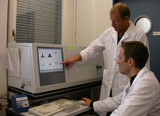
Building upon earlier research at Eawag, Franziska Bosshard has gained further insight into the inactivation mechanisms of bacteria at cellular level during solar water disinfection (SODIS).

She confirmed earlier hypotheses that the formation of reactive oxygen species during UV-irradiation is responsible for the inactivation process. Membrane proteins involved in the energy generation of bacteria are the first targets of cell damage, followed by other protein damages and the aggregation of proteins. This process is very similar to the aging process of cells.

Bosshard, F., Berney, M., Scheifele, M., Weilenmann, H.-U., & Egli, T. (2009). Solar disinfection (SODIS) and subsequent dark storage of Salmonella typhimurium and Shigella flexneri monitored by flow cytometry. Microbiology, 155, 1310–1317.

Other scientific publications


SODIS in Haiti

21st of January 2010 - Monika Tobler
Flyer Französisch

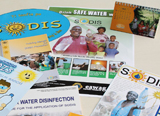
As many Organizations asked us for SODIS training material we developed a flyer for SODIS promotion in Haiti. The flyer can be distributed together with PET-bottles. Unmodified it can be printed and distributed without consulting us.

Flyer in French [pdf]
Flyer in Creole [pdf]
Flyer in English [pdf]
Flyer in Spanish [pdf]

Further SODIS education material is available here >>


Archive of the news and the press releases

SODIS
Überlandstrasse 133
P.O.Box 611
8600 Dübendorf
Switzerland
Phone +41 44 823 53 92
info@sodis.ch
© SODIS 2010
Last update: 17.08.2010
 
An initiative of

Swiss Federal Institute of
Aquatic Science and Technology